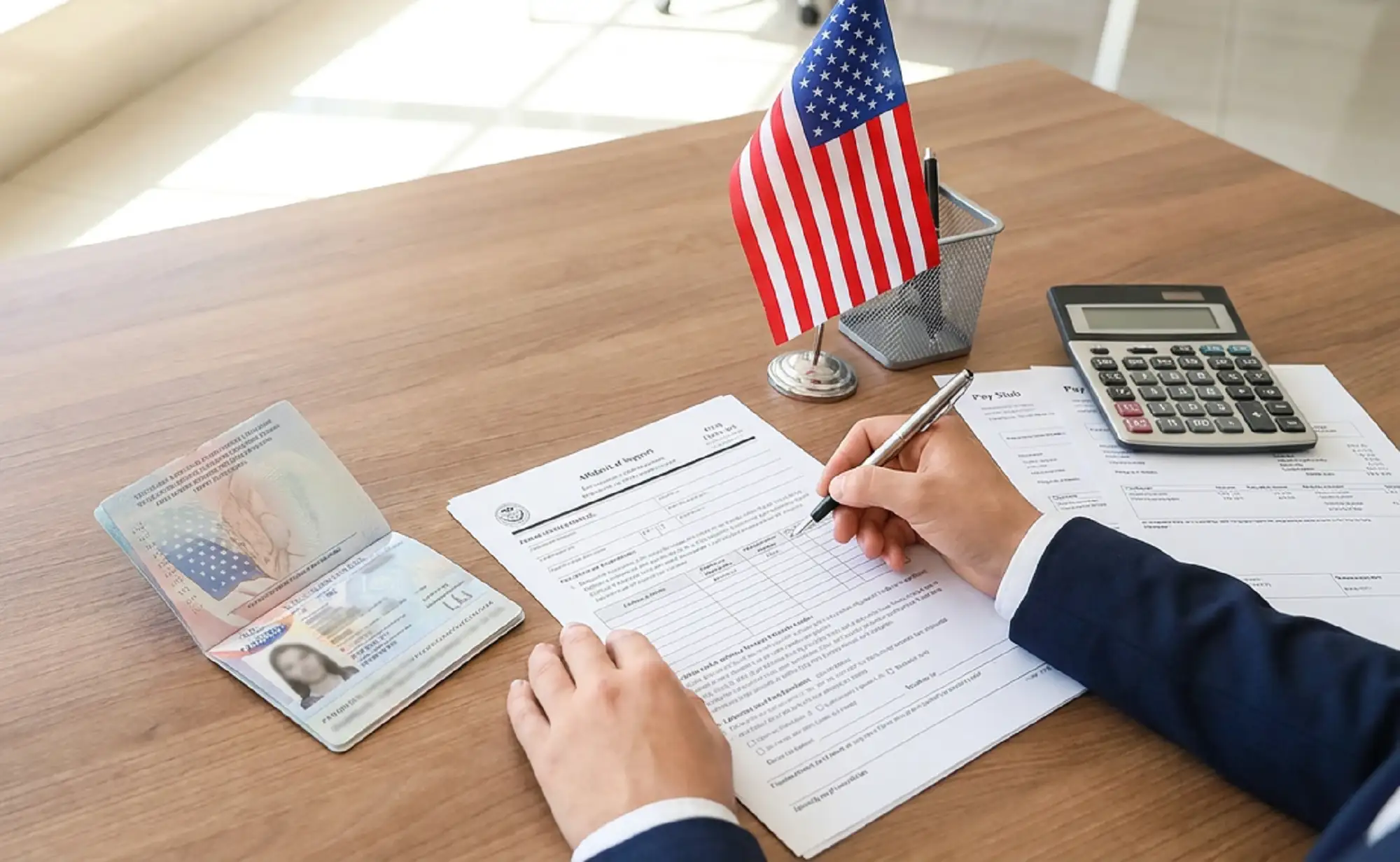
Getting a green card through marriage is one of the most common routes to lawful permanent residence in the United States. The process starts with a petition, moves through biometrics and evidence review, and ends with an interview and a decision. But how long does it actually take in 2026? That depends on who is sponsoring you, where you live, and what is happening inside USCIS at the moment you file. This guide walks through current marriage-based green card timelines for both Adjustment of Status and Consular Processing, the factors that push those timelines in either direction, and practical steps that help avoid the most common delays.
Marriage Green Card Timeline: 2026 Overview
Two main variables will influence your timeline more than anything else: whether the sponsoring spouse is a U.S. citizen or green card holder, and whether you’re filing from inside or outside the United States.
Many sources still quote nine to 11 months as the expected wait for a marriage green card. However, this figure no longer reflects the current reality of USCIS processing. The table below is based on data from USCIS’s Case Processing Times tool, which is updated weekly and broken down by office and form type.
*Spouses of green card holders fall under the F2A preference category. Even after their I-130 petition is approved, the beneficiary must wait for a visa number to become available in the monthly DOS Visa Bulletin before their case can move to the next stage. This wait is separate from the USCIS processing time and is determined entirely by annual visa caps. Wait times in this category vary by the applicant's country of birth and current Visa Bulletin movement.
Marriage Green Card Timeline for Applicants Inside the United States
If the foreign spouse is already in the United States and entered lawfully, Adjustment of Status (AOS) is typically the route — filing Form I-485 together with Form I-130 in the same package. Many sources still publish outdated estimates for each stage. The table below compares those commonly cited figures against what applicants are actually experiencing in 2026.
Spouses of U.S. citizens in the immediate relative category can file I-130 and I-485 at the same time through concurrent filing. This removes weeks from the overall timeline and locks in the earliest possible priority date. It is one of the most practical advantages available to eligible couples and is often underused.
Marriage Green Card Timeline for Applicants Outside the United States
When the foreign spouse lives abroad, the case moves through Consular Processing. After USCIS approves the I-130 petition, the file is transferred to the National Visa Center (NVC), which prepares the case before forwarding it to the relevant U.S. embassy or consulate for an immigrant visa interview. The applicant then enters the United States as a lawful permanent resident using the immigrant visa stamp.
The table below reflects updated 2026 timelines for each stage of the consular process for spouses of U.S. citizens.
One additional factor not captured in the table: some applicants face administrative processing holds after the consular interview — sometimes referred to as "221(g) holds" — during which the embassy conducts additional background review. These holds are not reflected in USCIS processing time data and can add weeks or months to the consular timeline depending on the applicant's country and individual background check results. There is no fixed deadline for resolving them.
What Affects Processing Time: Key Factors in 2026
USCIS processing times aren’t fixed. Rather, they shift based on policy changes, filing volume, and individual case details.
The following table summarizes the main factors that affect how quickly a marriage-based green card application moves through the system and how significantly each one can extend the timeline.
The 2026 Adjustment-of-Status Policy Shift
On May 21, 2026, USCIS issued Policy Memorandum PM-602-0199, formally characterizing adjustment of status as an "extraordinary relief” and an “act of discretion" rather than a routine alternative to consular processing.
In practical terms, this means USCIS officers now have explicit agency-level backing to apply additional scrutiny and, in some cases, to deny AOS applications even when every statutory eligibility requirement has been met.
The absence of adverse factors alone is no longer enough to carry an application through — applicants must affirmatively demonstrate positive equities, such as ties to the United States, maintained lawful status, and a bona fide marriage.
Couples with complicated entry histories, prior visa violations, or short timelines between entry and marriage filing are most likely to be affected by this change.
The Conditional Green Card: An Often-Missed Extra Step
If the marriage is less than two years old when USCIS approves the application, the foreign spouse will receive a conditional green card valid for two years rather than a standard 10-year card. This isn’t a penalty but a standard part of the process for marriages that are newer at the time of approval. That said, it does add a meaningful extra step.
Within the 90-day window before the conditional card expires, the couple must file Form I-751, Petition to Remove Conditions on Residence. USCIS currently takes 18–30 months (or longer) to process I-751 petitions. The agency will issue an automatic extension notice that preserves lawful status while the petition is pending, but this is a considerable additional wait that couples should plan for in advance.
If the couple's circumstances change, such as the marriage ending before the I-751 petition is approved, hardship-based waiver options are available. However, waivers require individual legal analysis and are not automatic.
What If My Sponsor Is a Green Card Holder, Not a U.S. Citizen?
Spouses of U.S. citizens qualify as immediate relatives, which means there’s no annual visa cap and no waiting for a visa number. Once USCIS approves the I-130 petition, the case can move forward to I-485 filing or a consular interview right away.
Spouses of green card holders fall under the F2A preference category. Even after the I-130 is approved, the beneficiary must wait for a visa number to become available before the case can advance. In 2026, F2A wait times range from 18 to 36 months or more, depending on the applicant's country of birth. That wait begins after the I-130 is already approved.
The total timeline from initial filing to final approval can easily extend to three to four years or longer. Any applicant in this situation should therefore plan accordingly and consult an attorney before filing to understand the full timeline.
How to Reduce Preventable Delays
You cannot control USCIS caseloads, policy changes, or how many applications a service center receives in a given month. But a substantial share of marriage green card delays come from filing mistakes, incomplete documentation, and missed notices — all of which are preventable. The steps below make a meaningful difference.
- File concurrently when eligible. For immediate relatives already in the U.S., filing I-130 and I-485 together removes weeks from the timeline and locks in the earliest possible priority date. It also reduces the risk of a gap in status.
- Document the bona fide marriage from the start. USCIS scrutinizes relationship evidence more closely than in previous years, particularly following the May 2026 policy shift. Joint financial records, shared lease or mortgage documents, photos, and correspondence should be organized before filing — not gathered after receiving an RFE.
- Use current form editions. USCIS enforces edition cutoffs and rejects filings submitted on outdated versions of forms. Verify the current edition at USCIS.gov before printing any form.
- Pay the correct fee. USCIS updated certain fees in 2025 and announced additional adjustments for 2026. A filing submitted with an incorrect fee amount is rejected and must be resubmitted, adding weeks to the timeline.
- Respond to RFEs completely and on time. Partial responses or responses submitted after the deadline result in denial. An RFE typically gives 30 to 87 days to respond. A complete, well-organized response submitted promptly minimizes the added delay.
- Keep your address current. Update your address through your USCIS online account or by filing Form AR-11 within 10 days of any move. Missed USCIS notices — including RFEs and interview notices — can result in denials that are difficult and time-consuming to reverse.
- Prepare thoroughly for the interview. Review your application in detail before the interview. Bring originals and copies of all supporting documents. For marriage-based cases, be prepared to answer detailed questions about your relationship timeline, shared finances, and daily life together.

Frequently Asked Questions
Can I work while waiting for my marriage green card?
Yes, if you are filing Adjustment of Status. You can file Form I-765 for an Employment Authorization Document alongside your I-485. EAD processing in 2026 runs approximately 3 to 7 months. Once approved, it grants unrestricted work authorization while your green card application is pending.
Can I travel while my application is pending?
Travel while an I-485 is pending requires Advance Parole authorization, filed using Form I-131. Leaving the United States without an approved Advance Parole document while your I-485 is pending is generally treated as abandonment of the application, which means your case would be closed and you would need to start over. Always confirm your travel eligibility with an attorney before making plans.
Does marriage automatically give you a green card?
No. Marriage to a U.S. citizen or green card holder establishes eligibility to apply, but USCIS must independently review and approve the application. The marriage must be legally valid and bona fide, the petitioner must meet financial support requirements under the Affidavit of Support, and the beneficiary must be admissible to the United States. The application can be denied for a range of reasons even when the marriage is genuine.
Is there a way to speed up the process?
There is no general expedite option for family-based green card applications. Premium Processing is not available for I-130 or I-485 filings. The most effective ways to shorten the overall timeline are filing concurrently when eligible, submitting complete and well-documented applications from the start, and responding quickly and completely to any USCIS requests.
What happens if we get divorced while the case is pending?
A legally valid and bona fide marriage at the time of filing is a statutory requirement. If the marriage ends during the pendency of an I-485 application, the legal basis for the petition no longer exists and the application will typically be denied. There are limited exceptions and alternative pathways in some circumstances — such as cases involving abuse or extreme hardship — but these require individual legal analysis and are not available in every situation.
SimVisa Guides Chicago Couples Through Every Stage of the Marriage Green Card Process
Marriage green card timelines in 2026 are longer and more complex than many applicants expect, and the regulatory environment has shifted in ways that make preparation more important than ever. SimVisa, a Chicago-based immigration law firm works with couples at every stage of the family immigration process. Contact SimVisa today for a free consultation and find out what your realistic timeline looks like.