If you are trying to deal with the U.S. immigration system as a couple right now, you are likely feeling a heavy mix of anxiety, frustration, and confusion. The daily headlines are loud, and the Trump Administration's stance on immigration has left many families wondering if their future in the United States is quietly being erased.
We hear the same question from couples every single day: “Is it even still possible to get a marriage-based green card in 2026?”
The short answer is yes. Absolutely. The long answer is that while the underlying laws have not changed, the process has been fundamentally rewired. U.S. Citizenship and Immigration Services (USCIS) has shifted from a posture of routine approval to one of aggressive verification.
Our immigration lawyers don’t panic over headlines. At SimVisa, we track current legal realities, and we’ve prepared this article to help you make informed decisions about your family's future.
What Hasn’t Changed Legally
A lot of the fear circulating online stems from a misunderstanding of how immigration law works. The executive branch can change procedures, but only Congress can change the law (the Immigration and Nationality Act). Here are the legal realities that remain firmly intact in 2026:
- You are still eligible: Spouses of U.S. citizens are still classified as "Immediate Relatives". This means there is no annual visa cap and no years-long wait for a visa number to become available.
- Same-sex marriages are still recognized: Federal precedent remains unchanged. Same-sex spouses continue to qualify for marriage-based immigrant visas on the exact same legal footing as opposite-sex spouses.
- Adjustment of status is still available: If your spouse is already in the U.S. legally (for example, on an H-1B, F-1, or TN visa), they can still apply to adjust their status to a permanent resident from within the country without having to leave for consular processing abroad.
If you are in a legitimate marriage, the door is absolutely still open. The difference in 2026 is simply how hard you have to push to get through it.
What Actually Has Changed in 2026
The current administration has implemented stricter administrative rules, making the application process a minefield for the unprepared. Here is what is actually happening behind the scenes:
1. "Zero-Tolerance" Filing Rules
USCIS is no longer forgiving minor administrative mistakes. In the past, an error might trigger a Request for Evidence (RFE). Today, it often triggers an outright rejection.
- Form editions: USCIS is strictly enforcing the use of the new 01/20/25 form editions. Submitting a single outdated page will result in your entire packet being sent back.
- Payment rules: You can no longer bundle your USCIS fees into one check. Every single form (I-130, I-485, etc.) now requires a separate payment. Mixed or combined payments are instantly rejected.
2. The End of the "Interview Waiver"
During the pandemic and its aftermath, many couples saw their in-person interviews waived. In 2026, mandatory interviews are the standard. Furthermore, officers are increasingly using early "Stokes" interviews (in which spouses are separated and questioned individually) when an application lacks overwhelming initial evidence.
3. Expanded Public Charge Scrutiny
The financial bar has been raised. Meeting the bare minimum income requirement on the Affidavit of Support (Form I-864) is often no longer enough. Officers are taking a holistic look at a couple's financial health, scrutinizing credit histories, savings, healthcare coverage, and the immigrating spouse's English proficiency and employability.
4. Aggressive Fraud Detection
USCIS is actively utilizing expanded database cross-referencing and unannounced home or workplace visits. They no longer take documents "at face value". Everything is verified.
What Makes Filing Riskier Today (and What Doesn't)
Not all cases face the same level of risk in 2026.
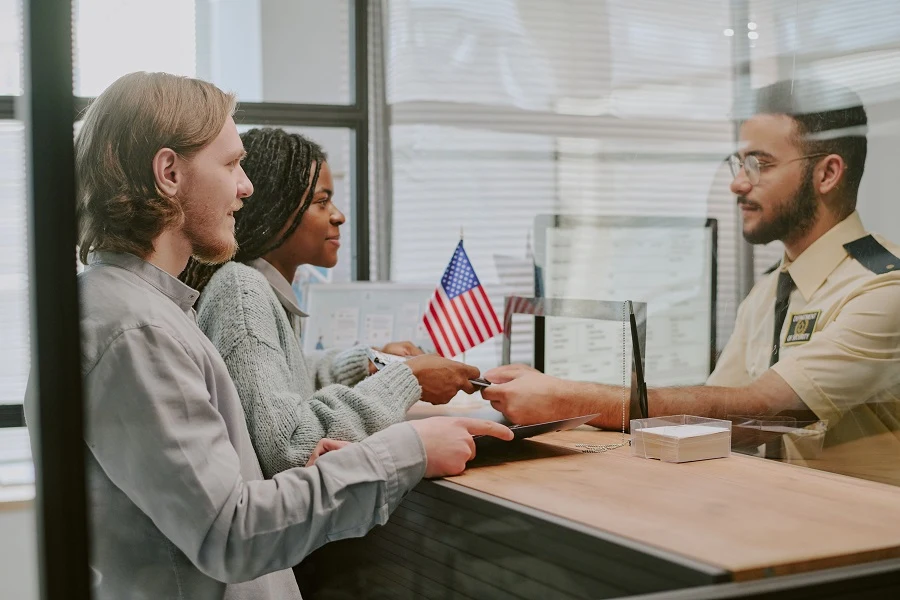
Situations that increase your risk in 2026:
- The "DIY" approach: Filing a Do-It-Yourself application is the single biggest risk you can take right now. The forms are less forgiving, and the margin for error is essentially zero. Hiring an experienced immigration lawyer is the safest way to approach your application.
- Submitting the "bare minimum" evidence: Sending just a marriage certificate and a few wedding photos is a red flag. USCIS expects a detailed, well-documented history of a shared life (joint leases, commingled finances, shared insurance, and travel records) from the start. See our blog on proving a bona fide marriage to learn more.
- Travel ban complexities: If the immigrating spouse is from one of the countries recently added to the 2026 travel ban and visa suspension lists, consular processing will be severely delayed or require complex waivers.
Situations that do not increase your risk:
- Filing right now: Many couples mistakenly believe that waiting for the political climate to "cool down" is safer. It is not. Waiting only exposes you to growing application backlogs and the risk of further, sudden administrative restrictions. Filing now locks in your place in line under current rules.
- Adjusting status from a valid visa: If you are currently maintaining a legal dual-intent visa (such as an H-1B) and have a clean immigration record, adjusting your status remains a highly secure and predictable pathway when handled correctly.

Stop Waiting for a "Better Time" to File
The era of the "easy" marriage green card is over. In 2026, increased scrutiny does not automatically mean denial, but it does mean that preparation, precision, and strategy are the only things standing between your family and a devastating delay.
Do not let fear dictate your timeline, but do not underestimate the complexity of the current system, either. A clean, complete, and strategically documented case will still be approved.
Would you like to schedule a consultation with SimVisa to evaluate your specific situation and build an airtight strategy for your family?