



Losing a spouse is one of life’s hardest experiences. And if your husband or wife were a U.S. citizen, it could also raise complex questions about your immigration future. A lot of people wonder: Can a widow still apply for U.S. citizenship after getting a green card?
In this guide, we’ll walk you through the rules step by step. You’ll learn how a surviving spouse can secure lawful permanent residency (a green card) under U.S. immigration law and when you can apply for citizenship after getting your green card.
How to Gain Citizenship as a Surviving Spouse
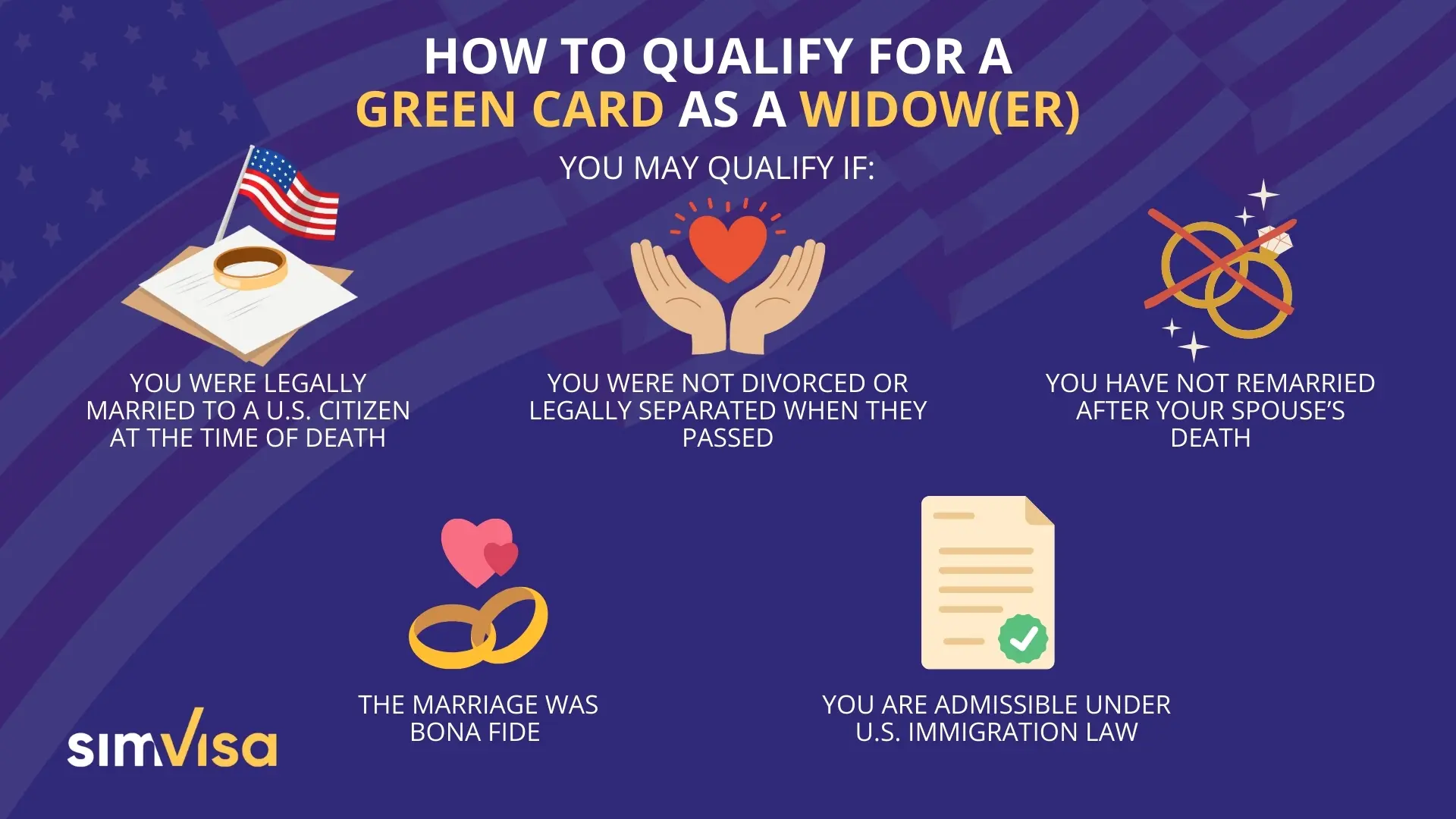
If your U.S. citizen spouse has passed, you may still be able to come to the United States or stay there as a permanent resident. Under U.S. immigration law, you may qualify for a green card as a widow or widower of a U.S. citizen if you meet certain conditions:
- You were legally married to a U.S. citizen at the time of their death.
- You weren’t divorced or legally separated from your spouse when they died.
- You haven’t remarried after your spouse’s death.
- You can prove that your marriage was a bona fide marital relationship and not solely for immigration purposes.
- You are otherwise admissible to the United States.
To get a green card, you or your spouse must have had an immigrant petition in process, or you must file one yourself. This is where many people get stuck on the details.
Step 1: Filing Form I-360
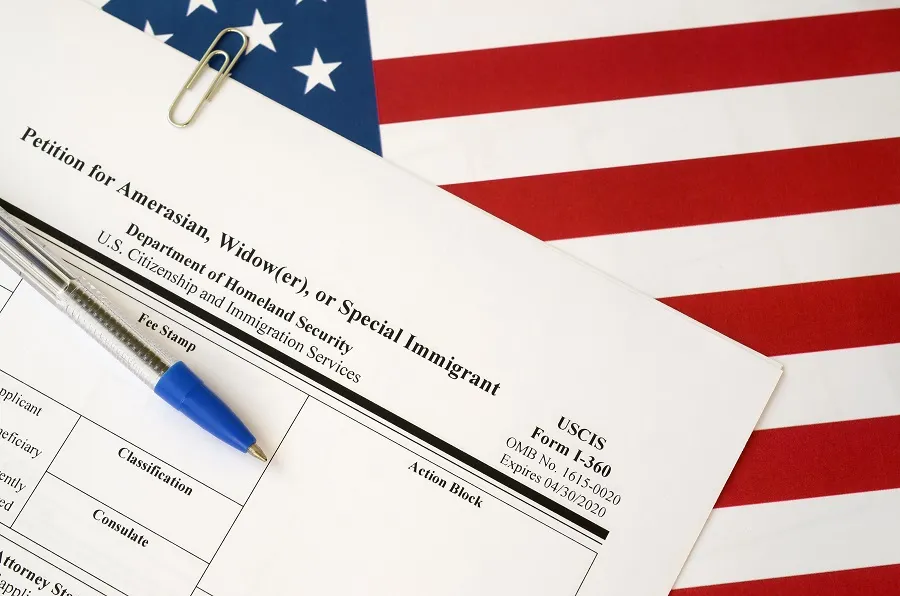
If your U.S. citizen spouse has died, you may be eligible to file Form I-360 to self-petition as a widow(er).
This petition shows that you qualify for a family-based immigration benefit as an immediate relative, a category that includes spouses and certain surviving spouses of U.S. citizens. Unmarried children under age 21 (known as “derivatives”) can normally be included on the I-360, even if your deceased spouse hadn’t filed a petition for them.
One of the following two situations will generally apply to bereaved spouses:
Your Spouse Filed Form I-130 for You Before They Passed
If your spouse’s Form I-130, Petition for Alien Relative, was pending or approved at the time of their death, you won’t have to start from scratch. By law, it will automatically convert to Form I-360, so you can continue the process without refiling.
Your Spouse Didn’t File Form I-130 on Your Behalf
If your spouse didn’t submit an immigrant petition for you before they died, you can self-petition by filing Form I-360 yourself. However, you must do so within two years of your spouse’s death.
This two-year time limit is strict. If you miss it, you could lose your eligibility unless a specific statute or exception applies.
Step 2: Getting Your Green Card (Permanent Residence)
Once your Form I-360 has been approved, the next step will depend on where you live:
- Inside the U.S.: You can file Form I-485 to adjust your status to that of lawful permanent resident (green card holder).
- Outside the U.S.: Your approved petition will go to a U.S. embassy or consulate for processing and a subsequent immigrant visa interview.
Upon receiving your green card, you’ll become a lawful permanent resident. That’s the status you need to attain before proceeding to naturalization or full citizenship.
When You Can Apply for U.S. Citizenship as a Widow(er)
Here’s the question most people want answered: When exactly can you apply for citizenship? The most crucial point to know is that the usual three-year rule doesn’t apply after the death of a spouse.
Under some provisions of immigration law (INA §319(a)), spouses of U.S. citizens who are still married and living in marital union may apply for naturalization after just three years as a lawful permanent resident. However, if your spouse passed before you naturalized, that three-year timeline likely won’t apply to you.
The law is clear: The accelerated three-year naturalization timeline only applies to green card holders who are living with their U.S. citizen spouse during the three years before filing. Once that spouse has passed away, that specific provision no longer applies.
This means that most surviving spouses must follow the standard naturalization procedure, which is as follows:
- Hold a green card for at least five years.
- Maintain continuous residence and physical presence in the U.S. during that period.
- Demonstrate good moral character.
- Be able to speak, read, and write basic English.
- Pass a required civics test.
In other words, as a widow(er) of a U.S. citizen, you may apply for citizenship after you’ve been a lawful permanent resident for at least five years.
Exceptions and Special Situations
Surviving Spouses of Deceased U.S. Military Members
Widow(er)s of military service members who died while serving honorably may be eligible for special benefits. If the service member was killed in active duty, there may be additional provisions allowing for citizenship without the usual residence requirements.
Child Status Protection Act
If your unmarried children are included in your I-360 petition, they may be protected under the Child Status Protection Act (CSPA), which can prevent them from “aging out” of eligibility when they turn 21 during the process.
Evidence You’ll Need for Filing and Naturalization
When submitting for your I-360 petition, you’ll typically need:
- Marriage certificate proving that you were married to a U.S. citizen at the time of death
- Citizen spouse’s proof of citizenship (e.g., U.S. birth certificate, passport)
- Evidence that any prior marriages ended before yours (e.g., divorce or death certificate)
- Deceased spouse’s death certificate
As you prepare for naturalization, you may also need:
- Your green card
- Evidence of your continuous residence and physical presence
- Proof of good moral character
- English and civics test readiness
Next Steps After You Get Your Green Card

Here are some key points to keep in mind once you’ve obtained your green card through the widow(er) process:
- Make sure to maintain continuous residence in the U.S. (meaning you live there most of the time).
- Avoid long trips abroad that could disrupt your residency requirements.
- Meet the good moral character standard (no serious criminal issues).
- Take the time to prepare for your naturalization interview and tests.
Naturalization processing times vary, but you can expect it to take several months after you’ve applied.

Frequently Asked Questions
Can I file for citizenship before five years if I was married to a U.S. citizen?
Unfortunately, no. If your spouse died, the accelerated three-year path most likely won’t apply. You’ll typically need to wait five years as a lawful permanent resident to be eligible for citizenship.
Will remarrying affect my eligibility?
Yes. If you remarry before your I-360 is approved, you’ll lose your eligibility as a widow(er) unless a specific exception applies under the Immigration and Nationality Act.
Does it matter how long my spouse and I were married?
No. Thanks to changes in U.S. law, there’s no longer a two-year marriage requirement before your spouse’s death to qualify as a widow(er).
Live Your American Dream with SimVisa
If your U.S. citizen spouse passed away before you could become a citizen yourself, there’s still a lawful path forward, first to permanent residency and eventually to full naturalization. The immigration system can feel overwhelming at a time when you’re already coping with loss, but fortunately, you don’t have to navigate it alone.
If you need guidance on your eligibility, probable timelines, or how to prepare your application, SimVisa can help. Our team routinely assists surviving spouses with I-360 petitions, green card processing, and naturalization planning so they can move forward with confidence.
Contact us today to speak with a qualified immigration attorney and learn more about your next steps.


