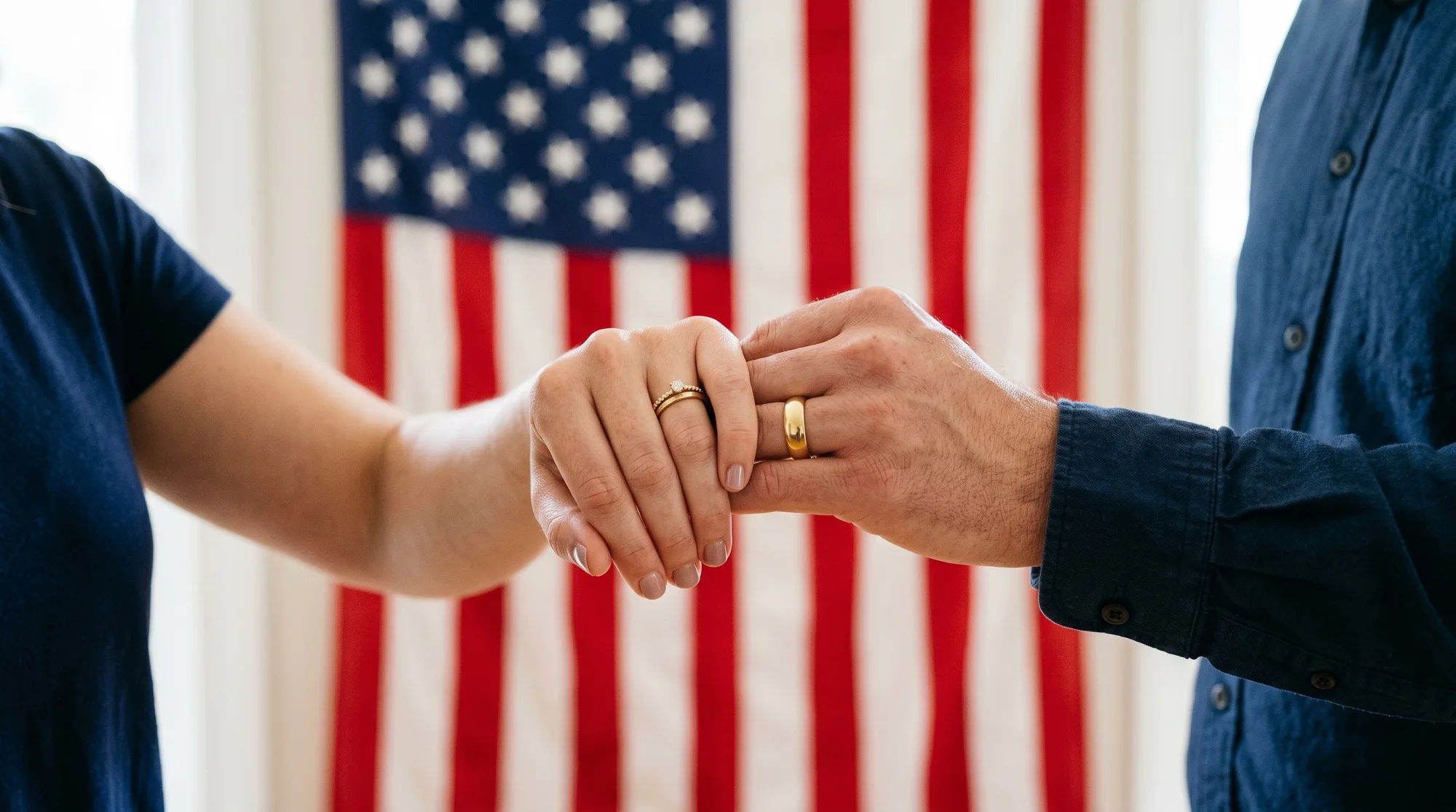
If you entered the U.S. legally, overstayed your visa, and later married a U.S. citizen, you may still be able to get a green card from inside the country. In 2026, the core rule is the same: Many immediate relatives of U.S. citizens can file for adjustment of status even after overstaying a visa, provided they can prove lawful entry and don’t have a separate inadmissibility problem.
A visa overstay isn’t the same thing as unlawful entry, which leads to a very different type of immigration law case. Learn more about how to obtain a marriage-based green card after a visa overstay.
When Adjustment of Status Usually Works
A marriage-overstay case is usually strongest when:
- The applicant entered the U.S. lawfully and can prove admission or parole, often through an I-94 or similar record.
- The sponsoring spouse is a U.S. citizen, which puts the case in the immediate relative category.
- The marriage is legally valid and bona fide; a marriage certificate is standard primary evidence, but USCIS can ask for more proof.
- There’s no separate inadmissibility issue, such as fraud, a serious criminal record, or another ground that requires a waiver.
USCIS’s website also states that certain bars to adjustment don’t apply to immediate relatives of U.S. citizens. For this reason, being married to a U.S. citizen can lead to lawful permanent residence even after a visa overstay.
When a Visa Overstay Becomes a Bigger Problem
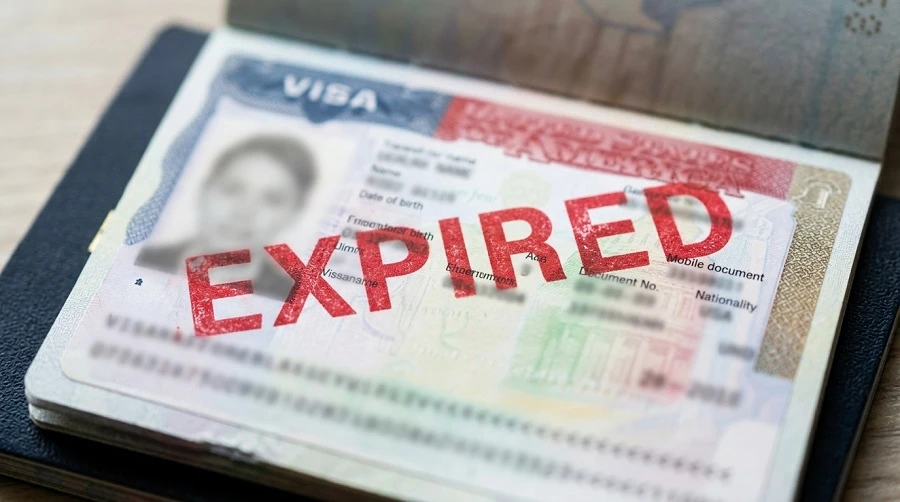
Overstaying a visa isn’t always a non-issue. The following facts can change a case’s outlook fast:
- The sponsoring spouse is a lawful permanent resident instead of a U.S. citizen.
- The applicant entered the U.S. without inspection rather than overstaying after a lawful admission.
- The applicant leaves the U.S. after building enough unlawful presence to trigger a reentry bar.
- The government believes the visa holder misrepresented the purpose of their original trip.
When it comes to visa overstays, marriage to a green card holder isn’t treated the same as marriage to a U.S. citizen. It’s a similar relationship category on paper but different adjustment rules in practice.
The 180-Day Rule Explained
For the spouse of a U.S. citizen who entered the country lawfully, staying more than 180 days doesn’t automatically mean the case must go through consular processing. The bigger danger is leaving the United States after accruing enough unlawful presence.
If the applicant has had an unlawful presence in the country for more than 180 days but less than one year, a three-year bar applies. If they’ve accrued more than one year of unlawful presence, they’ll be subject to a 10-year reentry bar if they depart and later seek admission again.
If the case can’t be finished in the U.S. and must go through a consulate abroad, USCIS still offers the I-601A provisional unlawful presence waiver process for certain immigrant visa applicants.
The Risk of Getting Married Too Soon: The 90-Day Rule
When someone comes to the U.S. on a visitor visa, gets married quickly, and files soon after entry, the government may investigate their intent at the border.
Under State Department protocols, conduct inconsistent with nonimmigrant status within 90 days of entry, including marrying and taking up residence in the U.S., may create a presumption of willful misrepresentation.
That doesn’t mean every case involving a fast marriage is denied. It simply means the filing should match the facts, the timeline should be clear, and the couple should be ready to credibly explain the sequence of events.
What USCIS Is Looking at in 2026
In 2025, USCIS issued updated family-based immigration guidance covering eligibility, filing, interviews, and decisions. It also stated that officers review whether the marriage is bona fide when ruling on the initial petition and again when deciding whether to grant permanent residence. In March 2026, USCIS announced stronger screening and vetting.
Here’s what that means for a 2026 filing:
- Expect a close review of your identity, admission history, and immigration status.
- Be prepared to provide extensive evidence of a bona fide marriage.
- Use the current form editions, as USCIS continues to post edition cutoffs and reject outdated versions.
- Check the fees before filing; USCIS updated certain fees in 2025 and announced inflation increases for some immigration-related fees in 2026.
There’s no single timeline for how long it takes to get a green card after overstaying a visa. USCIS says applicants should rely on the official processing-times tool since the timing can vary by form type and office. For applicants filing Form I-485 together with Form I-130, USCIS advises looking at the I-485 processing time.
What a Typical Filing Package Includes
In a standard overstay case based on marriage to a U.S. citizen, the applicant’s documentation package usually includes all the main green-card forms plus proof of the relationship and admissibility. Form I-485 is the application used to register permanent residence or adjust status, and immediate relatives may be able to file concurrently.
Common items include:
- Form I-130 for the initial petition;
- Form I-485 for the adjustment of status;
- Form I-130A for the spouse beneficiary;
- Form I-864, which is required for most immediate-relative and family-based cases;
- Marriage certificate, birth records, and proof that the marriage is real, such as shared records and other supporting evidence;
- Medical exam results and vaccination records.
Many applicants also file for employment authorization and advance parole while their green card case is pending. USCIS officials caution that, in general, leaving the U.S. with a pending I-485 without an approved advance parole document will be viewed as abandoning the adjustment application.
When the Case Stops Being a Simple USCIS Filing
Your marriage-overstay case will require a different strategy if any of these facts apply:
- The applicant is already in removal proceedings; certain people in immigration court can still seek relief, such as adjustment of status.
- A removal order has already been issued.
- There’s an issue involving fraud or willful misrepresentation.
- There’s a criminal issue or other grounds for inadmissibility that may require a waiver.
If any of these circumstances are present in your case, the guidance of an experienced immigration attorney will be a critical part of your filing plan, not an optional add-on.

Put Together a Compelling Filing Package
Can a visa overstayer get a marriage green card? In many cases, yes. If the applicant entered the country legally and is now in a bona fide marriage with a U.S. citizen, the usual course is to seek an adjustment of status using Forms I-130 and I-485.
If the sponsoring spouse is a green card holder rather than a citizen, things get more complicated. Family-preference cases require a current visa number, and having an unlawful immigration status at the time of filing can stand in the way of adjustment.
SimVisa is a Chicago-based immigration law firm that routinely assists applicants in securing marriage-based green cards, from preparing the correct forms to gathering evidence of a bona fide marriage to preparing for the USCIS interview. If your case involves a visa overstay, prior issues, or complex timelines, our skilled team can cut through the confusion.
Our goal is simple: file all required documents correctly, avoid delays, and help you move toward lawful permanent residence without unnecessary risk. Reach out today to get started.