Late November brought another round of fast-moving immigration developments, including new enforcement directives, shifts in visa policy, and renewed political debate over the direction of U.S. immigration strategy.
Trump Orders Permanent Pause on Migration from “Third-World Countries”
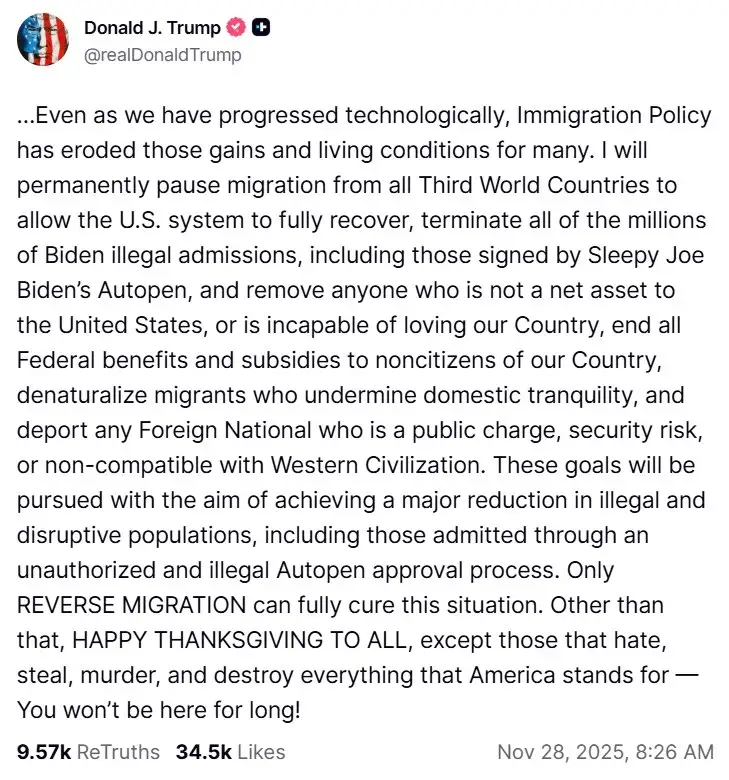
In the wake of the fatal shooting of two United States National Guard members outside the White House, Donald J. Trump on November 28 publicly declared a sweeping, indefinite suspension of migration from what he labeled “Third World Countries.” “I will permanently pause migration from all Third World Countries,” he wrote on his social-media platform, adding that the U.S. immigration system must first “fully recover.”
The president did not specify which countries that includes — beyond referencing the existing list of 19 nations from a prior travel-ban — nor outline how the freeze would be implemented, leaving thousands of visa applicants, asylum seekers, and immigrant-benefit petitioners in limbo.
Asylum & Afghan Immigration Halt: Thousands Left in Limbo
Within 24 hours of the announcement, U.S. Citizenship and Immigration Services (USCIS) and the Department of Homeland Security (DHS) paused all asylum decisions and stopped processing visa requests submitted by Afghan nationals. The pause extends indefinitely, pending reviews and “enhanced vetting.”
Refugees and applicants who have been waiting for resettlement or asylum — many of whom fled violence or persecution — describe the announcement as a sudden “closing of the door.” Advocates warn that the move may dismantle long-established humanitarian pathways, and several groups call the freeze a retaliatory overreaction that unfairly targets entire nationalities for the actions of one individual.
What the Administration Says
Trump justified the pause as a necessary measure to restore security and overhaul a “broken” immigration system. In his Truth Social post, he framed the freeze as a means to “terminate all of the millions of Biden illegal admissions … and remove anyone who is not a net asset to the United States.”
DHS later ordered a “full-scale, rigorous re-examination of every Green Card for every alien from every country of concern,” expanding scrutiny even to lawful permanent residents from the 19 previously restricted countries.
But critics argue the policy is less about security than spectacle. They warn that vetted refugees, asylum seekers, and visa holders — including many vulnerable to persecution — will be caught in a sweeping ban based on nationality rather than individual merit.
Human-rights organizations and refugee-advocacy coalitions describe the freeze as a blanket punishment, urging courts and lawmakers to uphold protections and due process for applicants who already cleared screening.
What Families & Applicants Should Know
- If you are waiting for asylum, a visa, or resettlement from one of the “countries of concern,” expect indefinite delays until the freeze is clarified or lifted.
- Green-card holders and lawful permanent residents from restricted nationalities may face re-examination of their status — an unprecedented policy direction that could affect previously approved cases.
- The lack of a clear list of banned countries or defined criteria creates a high-risk, unpredictable environment for any applicant from what the administration considers “third world countries.”
- Legal challenges are likely. Immigration-rights organizations warn that sweeping nationality-based bans may violate constitutional protections and federal law, especially for asylum and humanitarian cases.
Congressional Push to Freeze Legal Immigration: New Bill Introduced
On Nov. 20, Representative Chip Roy (R-TX) introduced the PAUSE Act, a sweeping bill that would freeze nearly all immigration to the U.S. — including family-based immigration — until unspecified “security and system reforms” are enacted. The bill would halt legal immigrant admissions except for tourism visas, restructuring or ending traditional family-sponsored and employment-based paths.
Though unlikely to become law in the near term, the proposal signals a rising legislative threat to legal immigration and family reunification pathways — a warning sign for anyone watching long-term trends.
Marriage-Based Interviews Trigger New Round of ICE Arrests
Reports emerging late November from local media in California describe a troubling pattern: spouses undergoing marriage-based green card interviews at USCIS field offices are being placed into ICE detention — even when their only issue was immigration status rather than criminal history.
One particularly harrowing case involved an immigrant mother holding her infant during the interview. Though her petition was ultimately approved, she was detained and traumatized. These arrests reflect a hardened enforcement posture, under which routine benefit interviews can trigger immigration enforcement rather than adjudication — a dangerous new reality for many family-based applicants.